[Yikes. This post has been in my draft queue since June. I’m going to go ahead and post this as is for now. More TBD!]
Via a Matt Stone post, I came across this fascinating video series on internet porn addiction. There are two things that are great about it: first, it’s extremely well produced and explains a complicated subject in a way that’s very accessible.
Second, although the theme is porn, the author uses food so frequently that it’s really a must-watch for anyone curious about how what we eat can affect the brain’s reward circuits and lead to overeating and potentially food addiction.
The first video is embedded above (all six are here and there are links there for transcripts if you prefer), and aside from the slightly embarrassing title, is completely SFW: safe for work. The total viewing time is a little bit over an hour, but I’ve summarized it below with timestamps so you can check out highlights you find interesting.
3:40 — super normal stimulation often leads to overconsumption
4:30 — reward circuit is activated when we engage in behaviors that further our survival (or the survival of our genes)
8:20 — dopamine loves novelty
10:40 — dopamine is released based on expectations rather than actions (it’s the drive to get it, the craving); the pleasure is related to opiates
dopamine is wanting it; opiates are liking it; addictions are chasing after dopamine; addiction is wanting more, but liking it less
5:00 — natural reinforcers can become addictive when:
- Highly stimulating version of what our ancestors found irresistible
- Is available in limitless supply
- Comes in lots of variety (novelty)
- We binge without realizing it’s triggering brain changes
12:00 — overstimulation of dopamine receptors means fewer receptors (like covering your ears when someone screams) — which means you get less pleasure from normal every day things
cycle of addiction
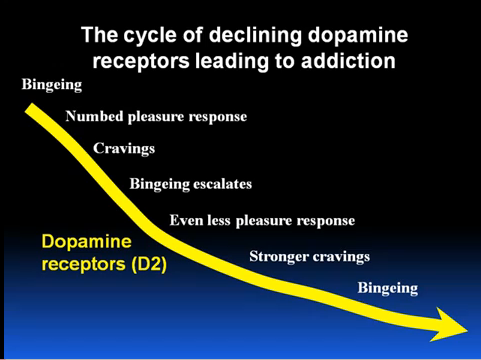
4:40 — receptor depletion longer lasting after food, when cocaine releases more dopamine?
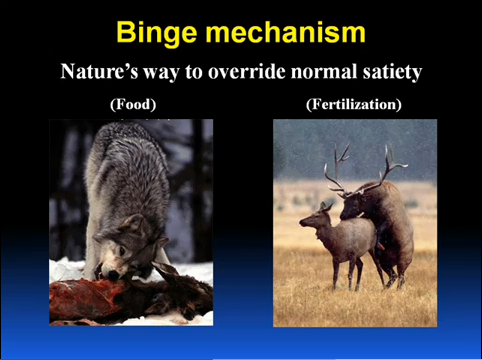
lizard brain: get it while the getting is good
Sooty (guinea pig who has his way with 24 females)
10:00 — brain circuits & paths
11:00 — strong emotions form strong memories: excitement, fear, shock, disgust, guilt, shame (like using a weedwhacker to create the pathway)
:35 — cues activate addiction pathways; lizard brain is then in charge
1:20 — how to recover: reboot & rewire
reboot: restoring sensitivity of reward circuitry (abstain for a time)
rewire: weaken addiction pathways, strengthen rational pathways (alternate response to triggers)
3:15 — over-stimulation caused the nerve cells to protect themselves
and they reduced dopamine receptors; numb brains are desperate for stimulation and that’s the root of cravings — after time, you’ll get more receptors and have fewer cravings … you’re healing your brain
testing it will increase healing time
5:20 — rewiring is difficult at first, but easier over time (let the grass grow in the path) — may not entirely disappear; need to avoid using the same pathways
6:15 — “Being hooked … is not a character flaw, or a sign of weakness, but evidence of an addiction process at work that is changing your brain.”
 Weight Maven is written by Beth Mazur. Beth believes that obesity is more symptom than cause and that the real problem is our modern culture -- especially diet. Beth writes about ancestral health, health policy, & mindfulness. And cats!


Excellent!